Smell is as powerful sense. A sniff of freshly baked bread can transport you back in time, remembering your grandma’s kitchen or a favourite bakery from your youth.
Smells are your brain reacting to combinations of molecules hitting receptors in your nose and interpreting those signals into something you recognize. Until recently scientists may have understood the structure of the smell molecule but it was nearly impossible to determine what smell you would be getting. A group of researchers set out to get it straight.
Scientists at Rockefeller University recruited 49 people and polled them on their perception of scents from 500 different chemicals. The subjects were asked to select a descriptor for each scent, choosing from a list of 19 “smell categories”: spices, bakery, sweet, fruit, grass, cold, decayed, wood, chemical, sour, acid, flower, musky, burnt, warm, fish, garlic, sweat and urine.
The researchers took all the collected data and started creating algorithms that could pair a molecule’s structural and chemical information with the “sent” it was most associated with. Through the IBM-run crowdsourced effort, the teams developed a system: in goes the molecule with its structural and chemical information, out comes the name of the scent. Though it is still early in this research the scientists expect they will eventually be able to mix smells with perfect accuracy.
It’s conceivable that an odour wheel could be created, much like a colour wheel, only for smell. So, one day we may actually be capable of mixing smells like we mix paint, based on the structure of molecules rather than subjective opinions. Who doesn’t want a future where you sit down in chemistry class, look at a molecule and shout, “Hey, professor, that molecule smells like piss!”

You are naked. Naked, running through your school halls and you’re late for your final exam. Where did all these hallways come from? That dream. Again. Could your bad dreams be caused by spicy foods? Yep, that late night Thai food adventure may have caused your nightmare. Well, maybe.
Weird dreams and spicy foods: researchers weight in
There is evidence that eating a spicy meal or snack before bed can bring on some weird and vivid dreams. In a 2015 study by Canadian psychologists Tore Nielsen and Russell Powell, 396 students were surveyed about their diet and dreams over two weeks. The results were published in an article titled Dreams of the Rarebit Fiend: Food and diet as instigators of bizarre and disturbing dreams, in the journal Frontiers in Psychology. The title refers to a comic strip from1905, Winsor McCay’s Dream of the Rarebit Fiend, in which people who ate a meal of cheesy Welsh Rarebit were plagued nightmares and weird dreams (see a panel from the comic strip below)
Neilson and Powell found that 18% of participants believed that food choices could influence their dreams, blaming dairy and spicy foods for causing disturbing dreams. Say it ain’t so!
The study authors were cautious in interpreting their polls, offering several possible explanations and encouraging future lab-based testing to more stringently assess correlations. Humans aren’t immune to the placebo effect and the study results might actually be a product of it.
The researchers allowed for another possibility: maybe that bad dream is just an upset belly telling you to wake up. Sleep disruption is a common symptom of gastrointestinal troubles. When your stomach is upset the discomfort often causes a person to drift in and out of sleep. Since we tend to remember the dreams we wake up from, waking a number of times through the night means we will remember more of them.
It is possible that when you eat just before bed you will still be digesting as your slumber hits REM, the stage of the sleep cycle where dreaming happens. As your body metabolises that late-night taco your internal temperature rises causing increased activity during REM. Consider people with high fevers experiencing vivid, even waking dreams.
Psychoactive properties in spicy foods could cause dream weirdness
Some spices have psychoactive properties that may affect dreaming. For example, nutmeg has a chemical composition similar to ecstasy. Of course, you would need to eat massive quantities to actually get high (please don’t try, the side effects are gruesome) but eating a heavily spiced meal before bed may elicit some strange subconscious activity.
The Nielsen and Powell study has relevance for people suffering from post-traumatic stress disorder (PTSD) and eating disorders. Emotional eating such as binge eating can disrupt sleep and trigger negative dreaming. It is possible that improving people’s sleep and dreaming quality through better dietary practices could be beneficial.
The researchers also suggest that fasting or dieting can influence the intensity of dreaming. Fasting is a classic method used in dream incubation rituals.
There is no magic recipe to influencing your dreams: one type of food won’t equal amazing, lucid dreams, while another will serve up nightmares. We do know that the size of the meal and the time it is eaten, not the specific type of food, can be the culprit for bringing on weird or disturbing dreams.
A panel from Dream of the Rarebit Fiend

Pizza trivia, by the numbers
• Over 5 billion pizzas are sold all over the world each year.
• Kids aged 3-11 prefer pizza over all foods for lunch and dinner.
• It is estimated that over three billion pizzas will be eaten next year in the U.S. alone. 93% of Americans eat at least one pizza per month. That’s approximately 100 acres of pizza each day, or 350 slices per second— an average of 46 slices (or 23 pounds) per year for everyone in America.
• Super Bowl Sunday is top day for pizza consumption in the US.
• In the US, 83% of pizzerias offer delivery and 91%t offer take-out.
• Women are twice as likely as men to order vegetable toppings on their pizza.
Pizza trivia: some history
• Though pizza became a popular food in the U.S. in 1945, after World War II, it was brought to America by Italian immigrants 50 years earlier.
• Pizza was being prepared by people of Pompei when the volcano erupted and buried the city.
• Pizza Margherita was given its name by an Italian tavern owner, Don Raffaele Esposito who assembled tomatoes cheese and basil, the colours of the Italian flag. He named the pizza after Margherita Teresa Giovanni, calling it the “Margherita” which is still popular in pizzerias with wood-fired ovens.
• The Hawaiian pizza was invented in the 1960s by Sam Panopoulos after adding pineapple to a pizza at the Satellite Restaurant in Sarnia, Ontario, Canada.
• Pizza as we know it could not have evolved until Europeans overcame their fear of a New World discovery – tomatoes. Native to Peru and Ecuador, tomatoes were introduced to Europe in the early 1500s. Brought back by Conquistadors to Spain. The tomato was thought to be poisonous and was viewed with suspicion.
• Gennaro Lombardi opened the first licensed American pizzeria in 1905 —Lombardi’s Pizzeria Napoletana in New York City.
Preferred crusts and toppings
• Regular thin pizza crust is the most popular crust, preferred by 61% of the population. Thick crust and deep dish tied for 2nd, at 14%. Only 11% of the population prefers an extra thin crust.
• In Japan, eel and squid are favourites
• Russians like red herring on their pizza
• Australians go for pineapple and shrimp
• Coconut is popular in Costa Rica
• In France a popular pizza is called the “Flambee”, topped with fresh cream, bacon and onions.
No question, a homemade BBQ sauce will kick the butt of most bottled sauces available. It takes time and an investment in ingredients though, so finding some shortcuts to boost the taste of the store sauces might be just the compromise between convenience and customization.
Here are a few ideas to get you started:
Add chipotle for a kick of heat and smoky goodness. A classic complement to chipotle is orange juice. You can stop there or make some more additions. Add some sweetness with honey and more chile complexity with ancho or pasilla chile powders.
Take a store-brand sauce and give it a Korean overhaul. A spoonful of galangal powder or Chinese 5-spice, a dash of fish sauce, a glug of rice vinegar and soya sauce plus a couple drops of sesame oil are transformative
Think heat, sweet and tang
Stir in some Epicentre Fire and Brimstone for a warm complex flavour or True North for south-west flavour with maple sweetness. Coffee/Chile steak rub is not just for steak; it will also bring the sweetness of brown sugar, the tartness of Worcestershire sauce and the unique flavour of Aleppo pepper. Roasted cumin adds a whole other dimension and smoked black pepper is right at home on the grill.
If you check the ingredients of bottled sauces you will likely find a whole lot of sugar. It is most often white sugar though which does a whole lot of sweet without the benefit of rich flavour. If you find the sauce could use more sweetness or is overly spicy or tart, add some brown sugar, maple syrup, molasses and/or honey.
Balance the sweetness of off-the-shelf sauces with the addition of vinegar. Apple cider vinegar is the standard in barbecue sauces but rice vinegar can have a more subtle touch. Lemon or lime is also good for upping the acidity and prepared or Dijon mustard can enhance the tang factor.
A little liquor goes a long way
Bourbon is classic. Once the alcohol cooks off you’re left with the spirit’s rich woody and smoky notes. (Don’t try this with Scotch: the flavour of the liquor is too strong) A slosh of beer, rum, vodka, brandy or liqueurs like Drambuie help elevate even bargain basement bottled sauces into gourmet zones.
Black cardamom, the wild cousin of green cardamom, has a much larger pod and is by no means a substitute for green cardamom.
It is quite bold and smokey compared to the subtle floral notes of its cousin. Popular in savory dishes of Africa and northern India, it lends a smokey, earthy camphor/like flavour. This component of garam masala, is definately a warming spice!
Try adding some of our ground black cardamom to cooked basmati rice, sautéed onion, a pinch of kashmiri chile and an a squeeze of lime. a perfect side dish for a meat or vegetarian meal!

Ingredients for Epicentre Chicken Tikka Masala Recipe
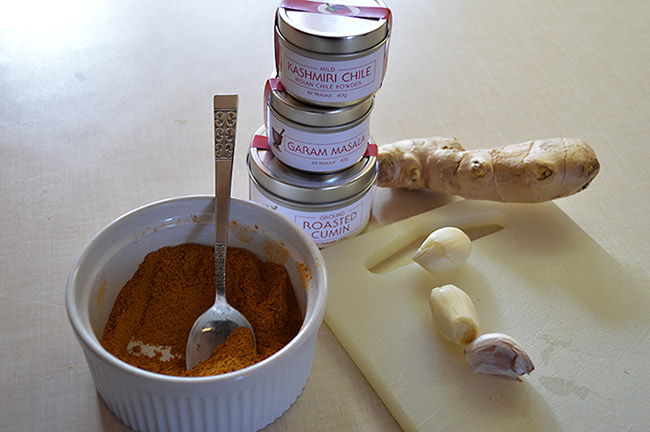
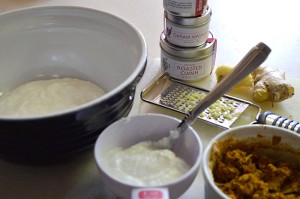
6 minced garlic cloves
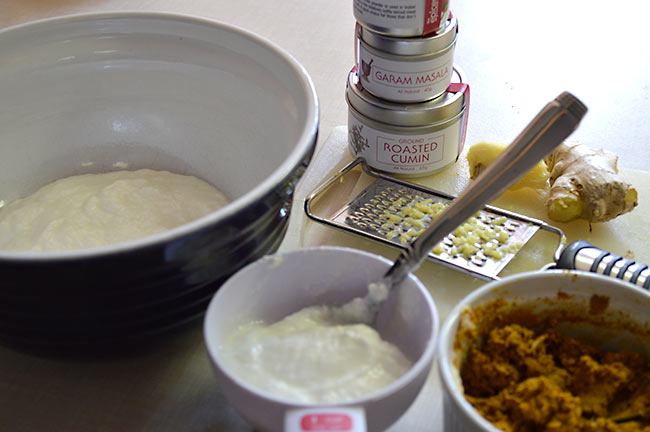
4 tsp peeled and grated ginger
4 tsp ground turmeric
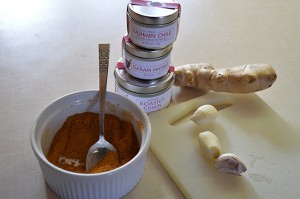
2 tsp The Epicentre’s Garam Masala
2 tsp ground coriander
2 tsp The Epicentre’s Roasted Cumin
1 1/2 cups plain yogurt
1 tbsp kosher salt
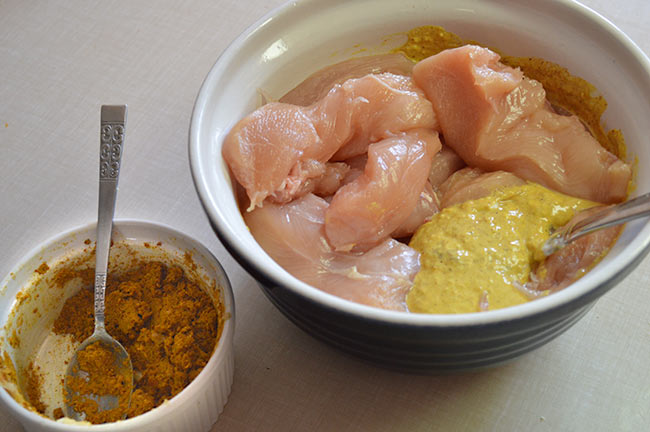
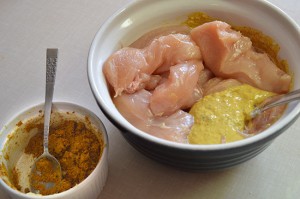
2 lbs skinless, boneless chicken breasts, cut in half lengthwise
3 tbsp vegetable oil or ghee (if available)
1 small onion sliced thin
1/4 cup tomato paste
6 The Epicentre’s whole green cardamon pods crushed
1 tsp The Epicentre’s Kerala chili powder (very hot) or Kashmiri (mild) or Reshampati (hot)
1-2 tbsp of The Epicentre’s dried Fenugreek leaves chopped
 1 28 oz can of whole tomatoes
2 cups heavy cream
3/4 cups fresh chopped cilantro
stemed basmati rice
Order our Indian spices here
Method
Combine garlic, ginger, turmeric,coriander The Epicentre’s garam masala and The Epicentre’s roasted cumin in a bowl.
Mix yogurt, salt and half of spice mixture in a medium bowl then add the chicken and turn to coat. Cover and chill 4-6 hours.
Cover and chill remaining spice mixture.
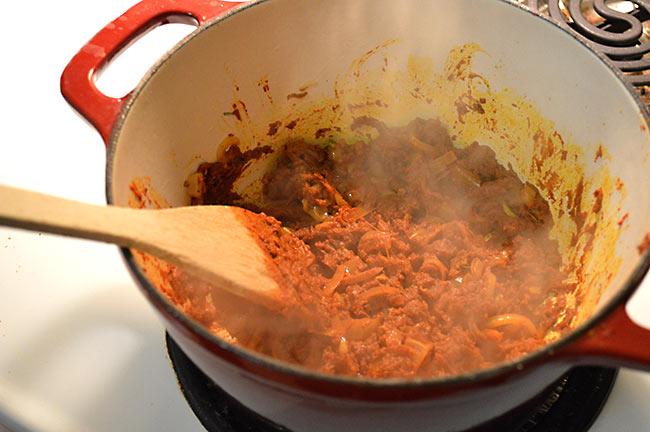
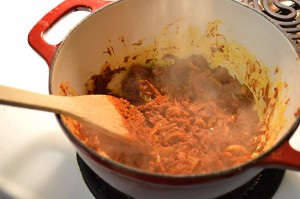
Heat vegetable oil in a large heavy pot over medium heat. Add onion, tomato paste, cardamom, and The Epicentre’s Kerala chile powder and cook, stirring often until tomato paste has darkened and onion is soft, about 5 minutes. Add remaining half of spice mixture and cook, stirring frequently about 4 minutes. Add tomatoes with juices, breaking them up as you add them. Bring to a boil, reduce heat, and simmer and stir until sauce thickens about 8-10 minutes.
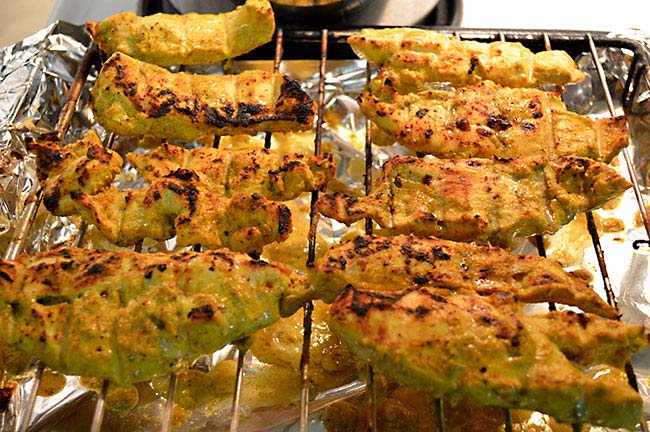
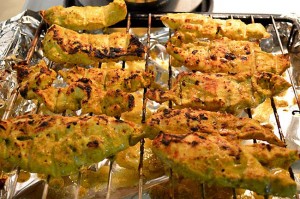
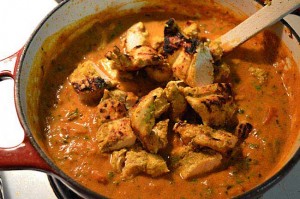
Add cream, The Epicentre’s fenugreek leaves and the chopped cilantro. Simmer, stirring occasionally until sauce thickens, 30-40 minutes. As the sauce thickens, preheat broiler. Line a baking sheet with foil and set a wire rack inside sheet. Arrange chicken onrack and broil until chicken starts to blacken slightly about 10 minutes.
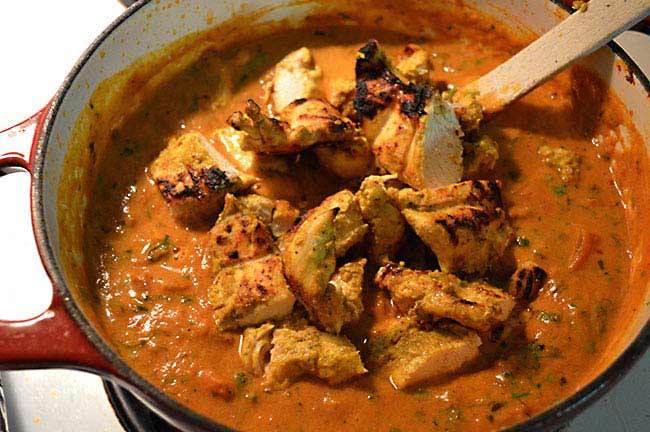
Cut the chicken into bite-size pieces, before adding to sauce, and simmer, stirring occasionally, until chicken is cooked through,
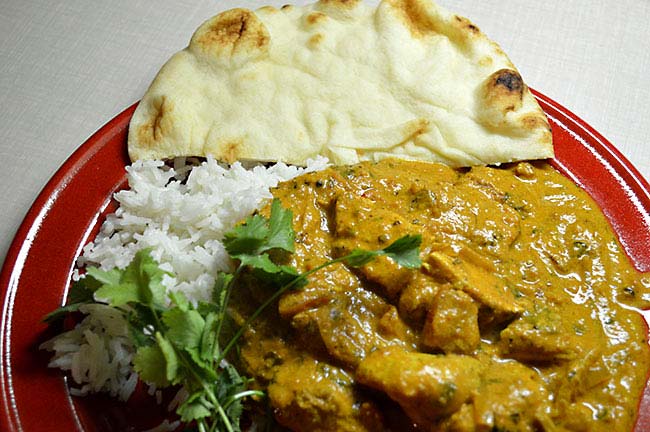
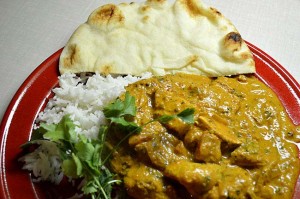
8-10 minutes. Serve with basmati rice, cilantro sprigs, your favourite chutney and warm naan bread!